

Slovenian Researchers Investigate the Role of Solar Wind in Water Formation on the Moon
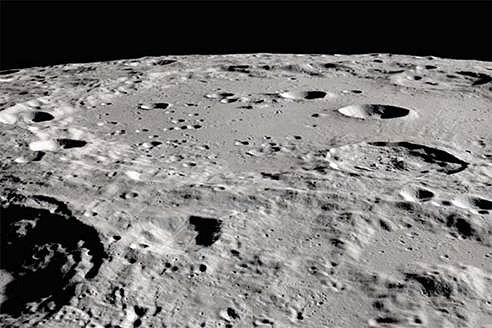
Researchers from the Jožef Stefan Institute and the University of Ljubljana, in collaboration with the Technical University of Munich, have published a scientific article presenting the results of their investigation into interactions between solar wind and materials resembling those found on the lunar surface. In laboratory experiments, they prepared synthetic lunar glass and samples of the mineral olivine, exposing them to deuterium ions to simulate the effects of solar wind protons. Using advanced analytical techniques, including nuclear reaction analysis, they investigated how deeply the particles penetrate the materials and how their distribution changes upon heating. The results showed that deuterium is primarily retained within the upper few hundred nanometres of the materials, while its concentration decreases significantly at elevated temperatures. These findings support the hypothesis that glassy particles in lunar soil may act as temporary hydrogen reservoirs, contributing to water formation and its diurnal cycling on the Moon. The research advances our understanding of processes occurring on the lunar surface and provides a valuable scientific foundation for future investigations of lunar water resources.
